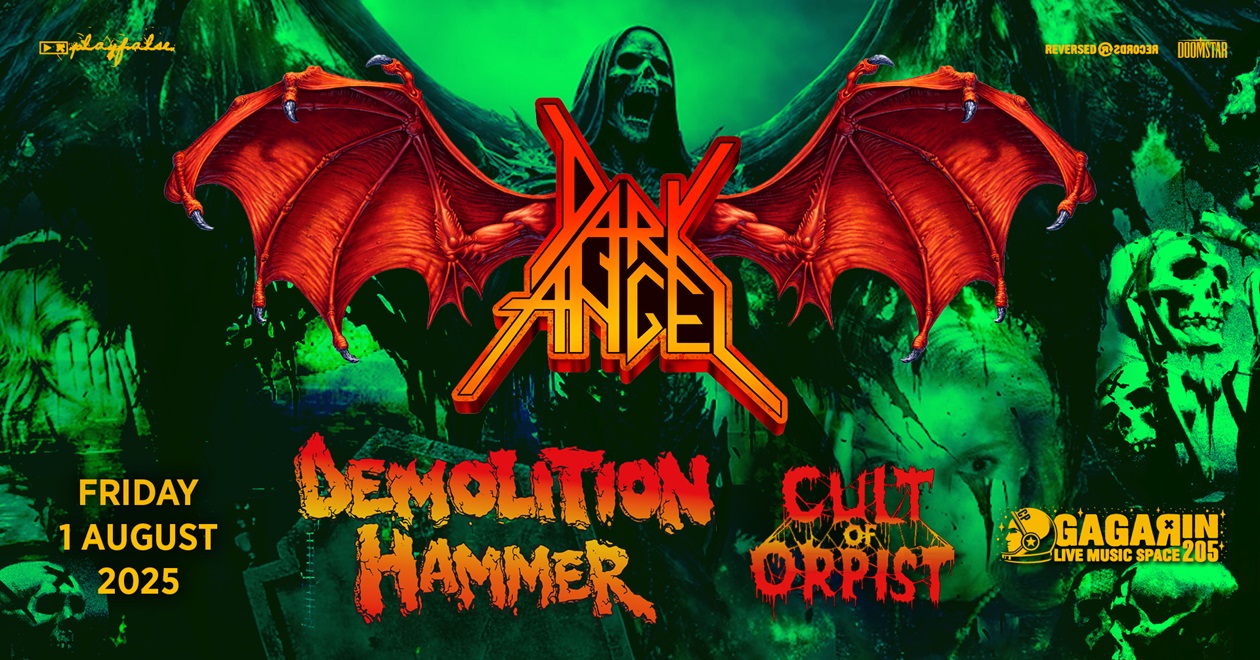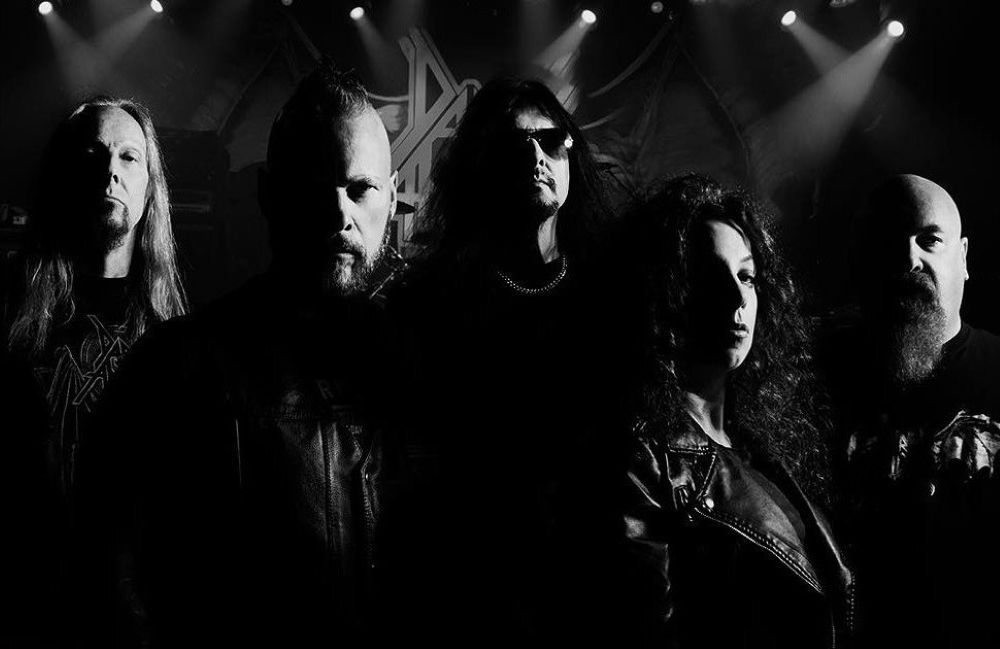
Dark Angel are visiting Athens in a few days for a show at Gagarin 205. Kyriakos Athanasiadis didn’t miss the opportunity to contact Gene Hoglan and discuss everything about Dark Angel as well as an extensive reference to Death and generally the American Thrash and Death Metal scene of the mid ’80s.
Good evening Gene! At first, I would like to say that it is a great pleasure to conduct this interview because we have a lot to talk about the past, the present and the future. Tell me, what’s new from Dark Angel?
G: Everything’s going great. I mean, we’re about to embark on a European tour, and that tour starts from Greece, and particular in Athens. That’s gonna be our second time playing there, and our first time was back in 2023. So, we’re all really excited. And, you know, we have the new album coming out, and we’re really happy about that. Additionally, we’ve just announced our US tour for the fall. We’re really feeling great for that one as well. So, there’s a lot of really interesting and exciting things going on for Dark Angel, and we’re happy to share them with everybody.
Very nice. Very nice. So, let’s start with the unfortunate part. The loss of Jim Durkin has definitely caused the band to an incredible high level. How do you feel about releasing the first Dark Angel album without Jim on the guitars?
Well, this is actually, it’s not the first Dark Angel album without Jim because as any Dark Angel fan knows, we released “Time Does Not Heal” (Editor’s note: Oops!). We had Brett Eriksen (Viking) on guitars. So, you know, when Jim left the band for the first time in 1989, we were able to carry on without him. But Jim was still alive then. It was Jim’s choice to leave the band the first time and we’ve remained friends.
“We just try to keep his spirit alive definitely through the riffs writing and through our love of Jim”
I mean, we were with Jim close friends. Whatever made him leave the band the first time in 1989, we were able to carry on and just hiccup right where we left off. So, but now that Jim is no longer with us, and this is our first album without Jim Durkin walking the earth along with us, we just try to keep his spirit alive definitely through the riffs writing and through our love of Jim and just the way that we’ve got him here in our hearts at all times.
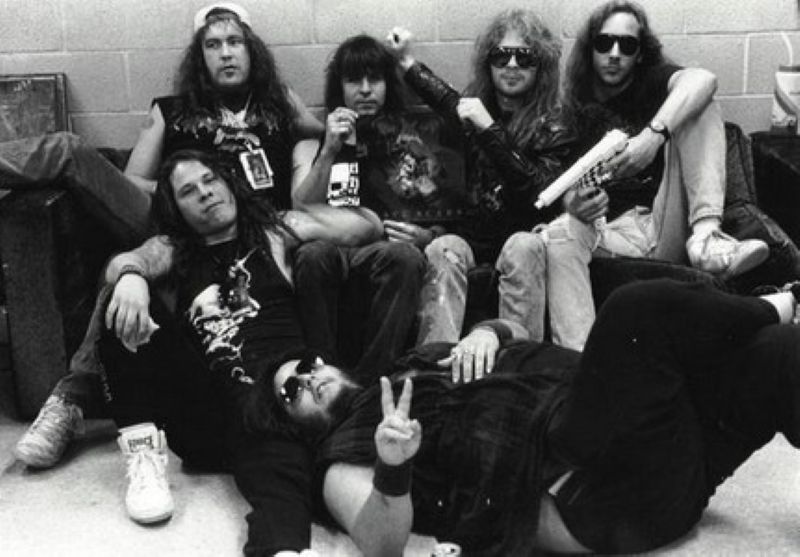
So that’s one way that we’re able to keep moving forward because he is the founder/creator of Dark Angel. Without him, Dark Angel would not exist. So, in the first place, we’re very grateful to Jim for putting the band together forty years ago, in particular forty-three years ago. Yeah, forty-four years ago, I guess. So Yes, that’s where we’re very grateful for that, and we just try to keep his legacy alive through the music. Because he’s written some great music as we all have.
“We’re just trying to keep moving forward and put a really positive outlook on things for Dark Angel.”
So, we’re just trying to keep moving forward and put a really positive outlook on things for Dark Angel. And that’s where we’re at this very positive juncture in our current lives where we have a new album coming out. We’re we are excited about that. We’re getting to tour a lot. We’re getting to hang out as pals and friends, so that’s really cool. And Jim is with us every step of the way. Absolutely. We’re happy to move forward with his spirit right here in our hearts. Absolutely.
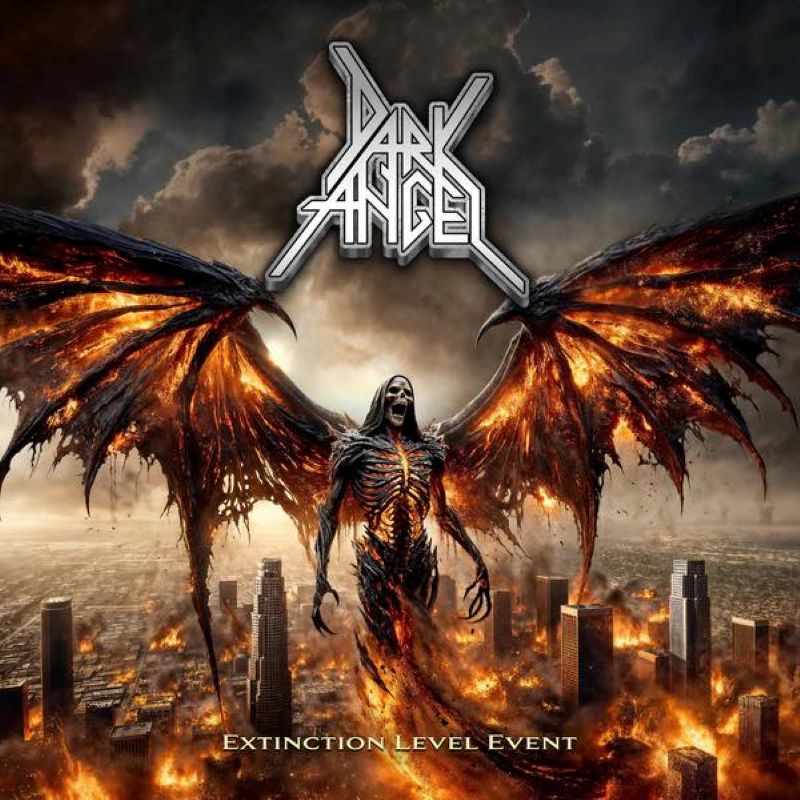
So, you released a couple of singles from your upcoming album, “Extinction Level event”, a while ago, which I thought were very good. What have been the reactions of the fans so far?
G: Well, as far as I know, like I said, I’ve said this many times. I spend no time online paying attention to what people say, good or bad. That’s never been a part of why I do what I do, but my management said that there’s a lot of positive. Although, there are some negatives. And so that’s where I’m just like, oh, negatives involving Dark Angel? Okay.
“I do this for us. I do this for me. We do this for us. So, if the fans wanna get on the Dark Angel “train”, killer!”
That’s always been. You know, we’ve been always a polarizing band. So if people enjoy the music, great. If they don’t, that’s their call. It’s not gonna keep me away from making kick ass metal. I do this for us. I do this for me. We do this for us. So, if the fans wanna get on the Dark Angel “train”, killer! And if there’s people out there as haters we’ve always had haters, you know, always.
So if that’s the case with the latest couple of singles, then, okay, it’s not going to change my mind, and it’s not gonna make me doubt anything. Like, my management said that there are some problems that people are facing with the artwork of the cover. Get over it, really. You know? Like, I love our cover. I love our artwork. Took us a couple years to get it together. Me and my artist, Kane Gillis, did a lot of work with it.
“So, this album for me is an absolute win – win”
And, you know, he is quite proficient at the computer graphics as well. It took a lot of work to get our artwork, and I’m excited about all of it. I’m very happy about the songs. I’m excited about the lyrics, the music, the production, the vocals, the performances in total. So, this album for me is an absolute win – win, and I’m just really, really excited to be able to share it with everybody.
I can’t wait for the day will come out. Come on, man. That’s all I’m saying. So there you go. It’s very nice. Very nice. I believe that the songs are very good. So it’s, evolution for, Dark Angel. Okay? We have 2025. It’s not 1986 or 1987, something like that. Thats the truth. This was the principle that was, you know, placed upon our selves with the writing.
“Dark Angel always been an evolution in progress, and that is still the case in 2025.”
It’s like, there’s no point we’ve never repeated an album, so there’s no point in trying to repeat something from forty years ago, you know, thirty-five years ago, what however long it’s been. We’re not gonna do that. So, Dark Angel always been an evolution in progress, and that is still the case in 2025. Absolutely.
Doesn’t it stress you out that you are releasing new work after 34 years, having a brilliant legacy in the past with albums that in a large part established much of Thrash Metal?
G: Am I stressed? God, no. Not in the slightest. Man, I’m excited! Yeah. This album is for me. Like I said, this is all my opinions. This album is gonna be for people. You know, this is gonna be I think like I say, I can’t really have any conjecture on what people are gonna think of it. Hhhmm. I love it, and I am no slouch in being a judge of what I think is good thrash metal. There’s a lot of thrash metal that I think is pretty damn generic. You know, over the years, it’s happened. It happens. Say, sometimes bands don’t release the best records.
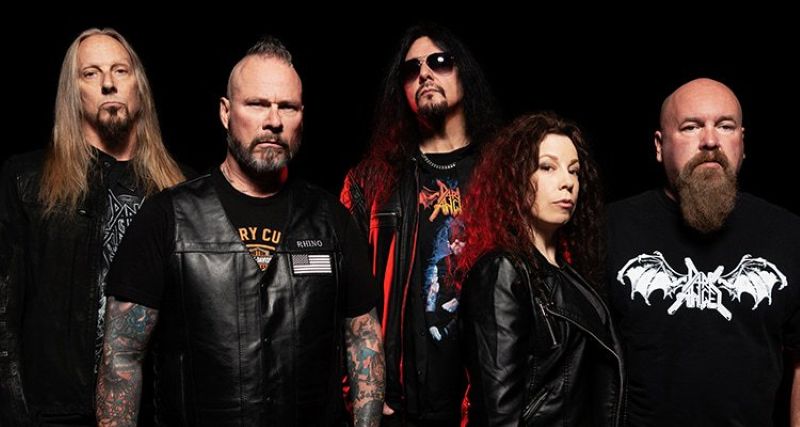
You could accuse Dark Angel of that. I don’t know how, but if you want to, that’s your call. But, you know, I think this album is gonna absolutely sit right at the top with tons of whatever you think about Dark Angel’s legacy, like, how yes. Dark Angel absolutely helps to create and mold a lot of extreme metal. And Dark Angel had a huge hand in influencing other thrash bands. I’ll give Dark Angel that. We had a large influence on a lot of what became death metal bands and extreme metal bands later. A lot of that happened with Dark Angel.
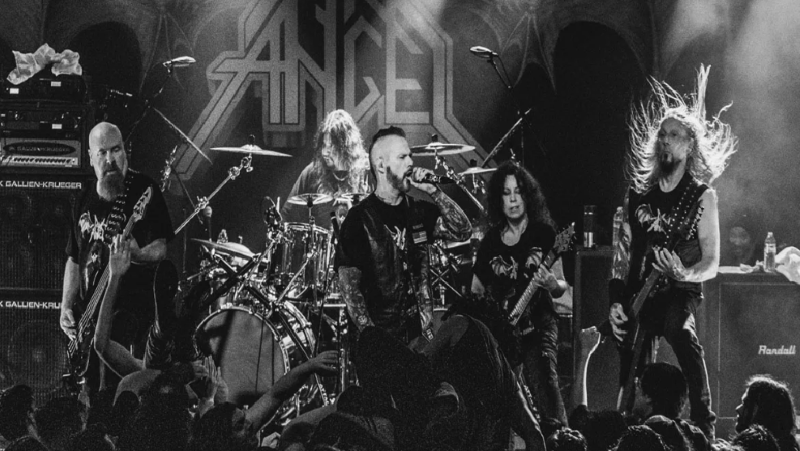
So, this new album is filled with really exciting thrash metal to me. So I’ll let everybody make up their own minds on it. You know? All I know is, like, when I get people reaching out to me saying: “Hey, man. We love the new song.” You know? Like, that’s how I hear from anybody. I get direct texts, because I’m not online. I have no interest in seeing what the world says on, you know, Twitter or Facebook or Instagram or anything.
“I move forward with all aspects of my career.”
Like, I’m way too busy for that. You know? So Yeah. Business. Judging, getting on there and going, what do people think about me on Instagram? Oh my god. You know what? So that’s the way I move forward with all aspects of my career. And I’m the only person I listen to my close-knit cohorts who are going to help guide my direction, but for the most part, I’m listening to myself, you know, pretty much.
Let’s go back a little bit, you once mentioned that if “Darkness descends” had cycled in early 1986 and not towards the end, its impact would have been different. Can you elaborate on that point of view?
G: You know, because we have a “Master of puppets” and a “Reign in blood” that was before “Darkness descends”. So you have said that, we’ll have a different impact to the people if this one I get what you’re saying. And, you know, that’s really just from what I heard at the time, just where, our record label folks were saying: “Man, this thing just came out two months ago, you know, or a month ago.”
“If you just had this album out a couple of months earlier Yes. They might have had a different impact.”
Because, I mean, it came out about three weeks after “Reign in Blood”. “Reign in Blood” is a “killer” record, you know, and “Master of Puppets”, killer albums! They are great, but, that was all. And people who reviewed it said I just reviewed the new Slayer album last week, and now I’m reviewing the new Dark Angel record.
And, boy, I tell you, “Peace sells…but who’s buying” of Megadeth just released a couple of months back, before I listened to Slayer. That’s all. That’s all conjecture, you know. Totally. I mean, just because just because somebody put that in an article somewhere or somebody told us that from the record label doesn’t necessarily mean it’s true. If you just had this album out a couple of months earlier Yes. They might have had a different impact. That’s fine.
“I’m not shy to recognize “Darkness descends” as impact or Dark Angel’s impact.”
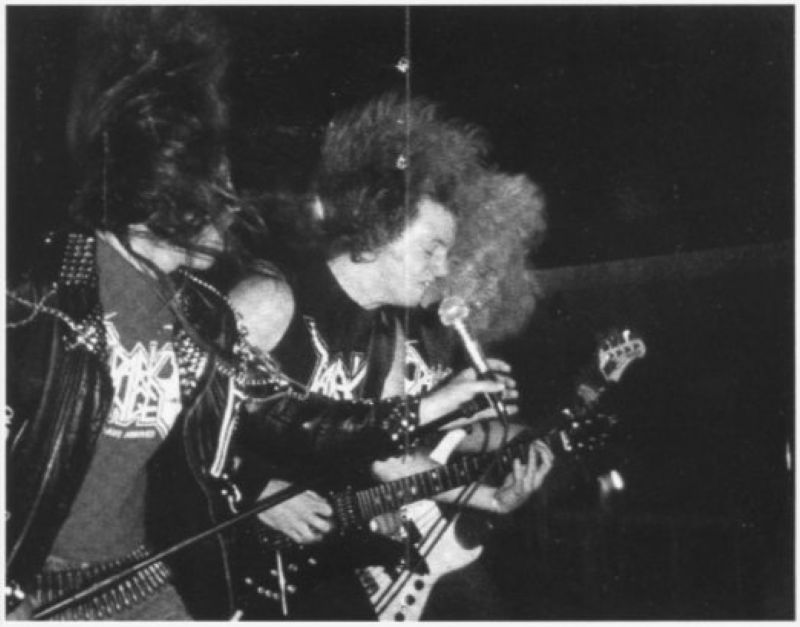
It still had quite the impact, had a big impact on all the big bands that are out there that were already out and a big impact on bands that were to come later. So it still had quite an impact. No doubt of that. So we’re proud of that anyway, you know, and I’m not shy to recognize “Darkness descends” as impact or Dark Angel’s impact. They were having impact on the metal scene before I joined Dark Angel.
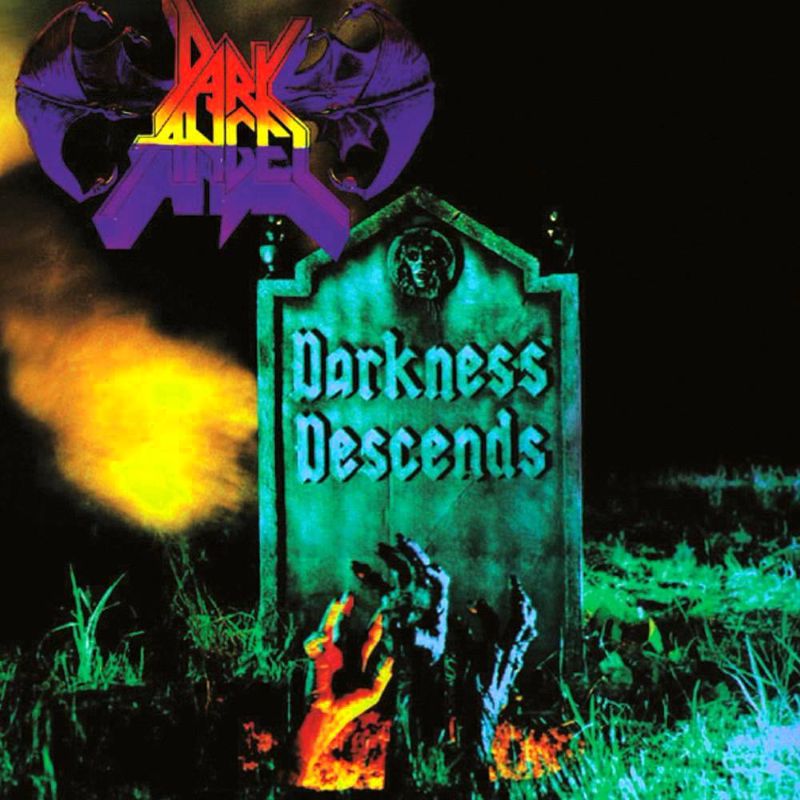
So I know I watched it in person, you know, before I was in the band. So, so there you go. That means that is something to be said, but we’re really happy that if “Darkness descends” has had an impact forty years later where people are still talking about it and people are still requesting, “Hey man! Would you come over to our town and play that album in its entirety?” We’re very fortunate for that.
“It wasn’t Dark Angel who made it an iconic record, or whatever term you want to use — says a lot. It was the fans who did it”
So, you know, I won’t discount that either. The fact that we still get to talk about this album — and that it wasn’t Dark Angel who made it an iconic record, or whatever term you want to use — says a lot. It was the fans who did it, you know, and people who wrote about Thrash metal in 1985 through ’87. Just Yeah! Τhose kind of people that have created the legacy that “Darkness descends” seems to have.
And for it to be included in a lot of those all-time greatest thrash albums lists — that’s very cool, you know? I mean, those lists are small, and we’re really appreciative to be on one of them. Yeah. But I believe that, those years, 1986, 1987, ’85, there were dozen of Thrash metal albums that were the beginning. So Absolutely. Every fan was, like, bombing with a lot of albums that time. A lot of Absolutely.
I mean, look at the year of 1986. I mean, all the classic albums that have come out, of course, from the big three of the big four. And, of course, you’ve got, you know, “Darkness descends”. You got, you know, you know, Kreator “Pleasure to kill”. Yeah. I don’t think Destruction was releasing great records as was, Sodom were bringing out good stuff, and I know Celtic Frost was too.
You know, Death Angel and Testament were both recording their records in ’86 to be released pretty early in ’87. So, so it’s a pretty magical year. In ’87, it followed up with a whole bunch of really “killer” records. And, you know, you got bands like Death releasing their album in ’87, which that was a pretty aggressive.
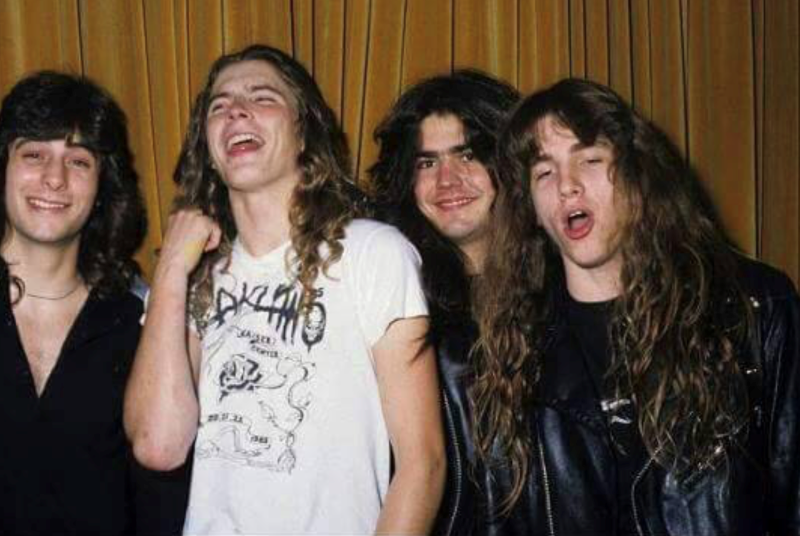
You know, it was pretty thrash metal esque with some gore lyrics and vocals over it. You know, “Thank you, Possessed, for setting that template”. A lot of it was really what an exciting few years of metal, you know? And metal is always retained its excitement, you know, no matter what. So, we’ll take it. Yeah. And, to say for the history that, you have used the same producer with them.
Also “Scream bloody gore” was with the same producer, that you used in “Darkness Descends”, I think.
G: That is correct. And, you know, before even “Darkness Descends”, Randy Burns, the producer, he was producing not only Possessed “Seven churches”, but also, Megadeth’s “Peace sells…but who’s buying”. And as well as I learned this way after the fact, but Randy Burns had a gigantic production, resume involved in the punk scene.
“Randy Burns, the producer, he was producing not only Possessed “Seven churches”, but also, Megadeth’s “Peace sells…but who’s buying””
All the punk bands that were huge when I was growing up around the LA scene, Randy Burns was pretty much the single man in charge of all of those. I learned that years and years after the fact. So Randy was around for a whole lot of killer stuff. Like, you know, he’d done some Nuclear Assault works as well. And you know, how cool is that? I mean, he has all those killer records.
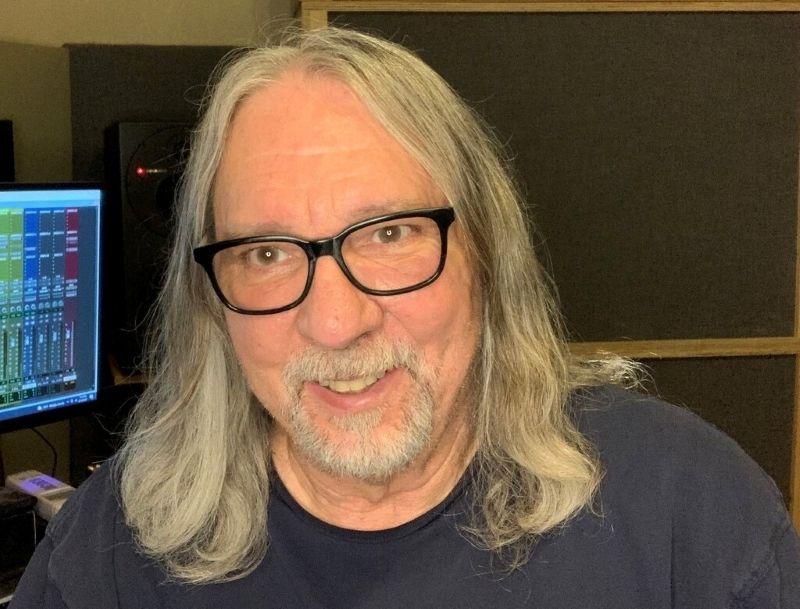
He also produced my favorite, Crumbsuckers album, “Beast on My Back”. What a legendary album that was. And Randy always Randy, I you know, we remain friends, and he’s been hanging around with Dark Angel quite a bit. You know, like, he’s he comes to our shows, and he came to a Dethklok show a few months back and all that. And we were talking about, like, just productions and things like that.
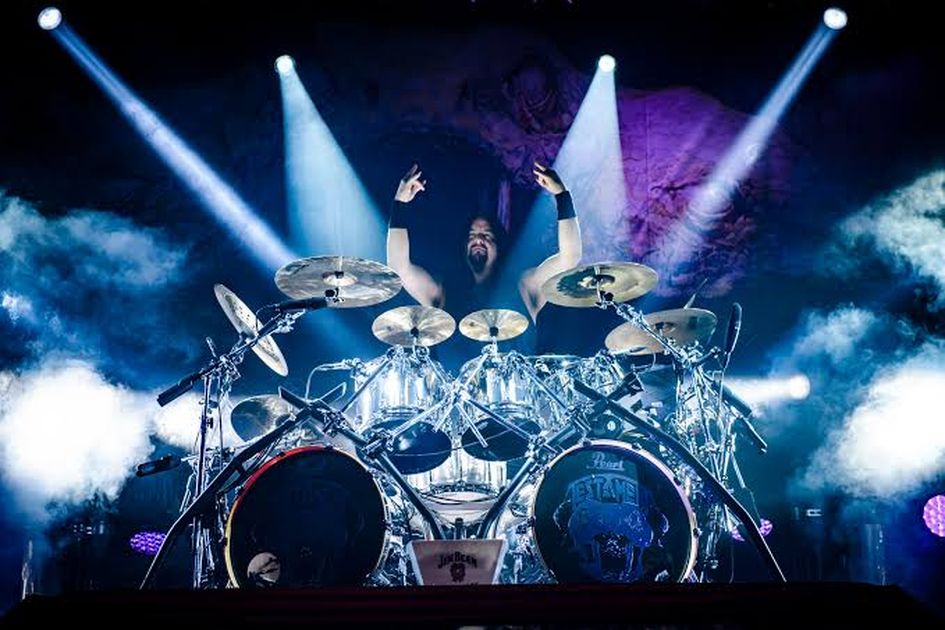
He was speaking with Brendon Small (Dethklok) about productions and you know, because Brendon likes a lot of those records too. And Randy had said, “I was pretty good at getting a drum sound.
“It was definitely cool working with both Burns, Randy and Scott.”
I wasn’t that good in getting a guitar sound.” I was like, because, I mean, his drum sounds are crushing. Like, the drum sounds are really huge. And I was like, “I never thought about it that way, where the drums are massive, but the guitars… yeah, I see what you’re saying now, Randy.” You know? That was a bit of a challenge for him. But still, it was definitely cool working with both Burns, Randy and Scott.
How do you feel that hundreds of bands in the industry cite your first three albums as a great insistence for their sound even after almost four decades. How do you see the modern Thrash Metal sound these days and which bands would you single out?
G: Well, you know, I mean, it’s very cool that we’ve had that kind of legacy, I suppose. So, I think your question was — are there any newer thrash bands that stand out? Yeah, definitely. I mean, I know they’re more death-thrash, but for me, Revocation is a pretty thrashy band. Their riffs don’t really sound like death metal to me, they sound more like aggressive thrash metal.
“I’ve always felt that bands like Cannibal Corpse, Morbid Angel and Deicide, musically, lean more toward aggressive thrash metal than the rumbling death metal”
And I think that’s awesome. And for me — just in my opinion — this is how I feel, because I love aggressive thrash metal so much. I’ve always felt that bands like Cannibal Corpse, Morbid Angel and Deicide, musically, lean more toward aggressive thrash metal than the rumbling death metal that was emerging back in 1985. You know, that early death metal sound that was just starting to bubble up.

To me, Cannibal Corpse riffs are killer, aggressive thrash riffs. I mean, take a song like “Hammer smashed face”, or “Stripped, Raped and Strangled”, or even “The Bleeding”, those are catchy, thrashy riffs. Very thrash-metal in feel. The vocals are very death-metal oriented — and I mean that as the ultimate compliment, you know — because I love Cannibal Corpse, I love Morbid Angel, I love Deicide. I love all these great bands. I love Obituary too, but their form of death metal is quite different from, say, Cannibal Corpse. You know? We all hear that, obviously — those are pretty obvious statements on my part.
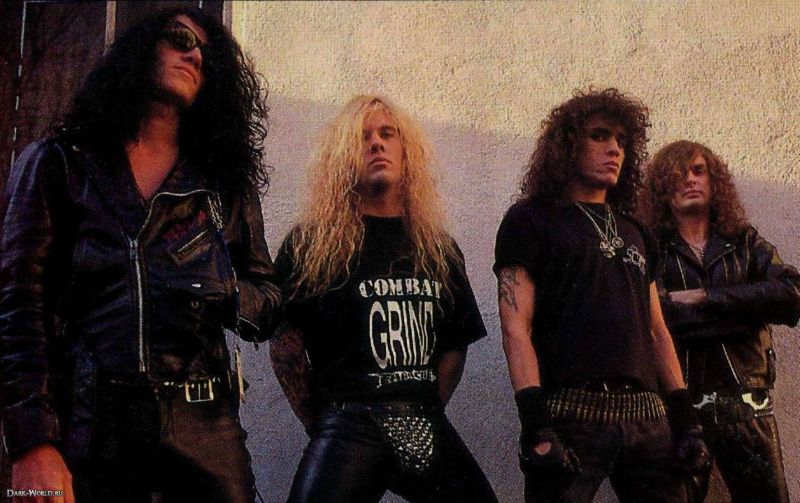
But yeah, I really do dig Revocation. And about ten years after thrash metal had its heyday, The Haunted released their first album, which included the song “Hate Song” — an instant thrash metal classic. I mean, that thing was amazing. Forbidden in 1997 put out “Green” record, which was a great album, and they were kind of, leaning away from what Forbidden used to sound like.
Forbidden now has some new material coming out. I’m excited to hear that because Forbidden is one of my all-time favorite bands. So I’m excited to hear, you know, what forbidden is sounding like. I’ve heard the “Divided by zero” single, and that’s killer Forbidden music. I mean, their new singer, Norman Skinner, is crushing it.
You know, he’s doing a great job. I mean, if you’re for those of us who love Russ Anderson, what a great, you know, what a great return to classic Forbidden sounds. So, you know, I’m excited for the new forbidden release. Also, you know, everyone keeps talking about the new Exodus, I can’t wait to hear it! For me, it’s the old-school guys — the ones who were putting out albums back in the day. I’m always going to listen to them, because they represent the evolution of this style of music. Where did it start in 1984, 1985, 1986, 1987? And where are those bands these days? I’m always going to pay attention to everybody that releases records.
For instance, I’m looking forward to the next Artillery album. I love Artillery. Boy, Terror Squad (Editor’s note: A Japanese band) records, one of my all-time favorites. Another one band that i like is Cyclone Temple. But yeah, that’s who I tend to pay more attention to. Still, there are so many younger bands keeping the music and the spirit alive. Killer stuff. And that, to me, is a testament to how cool thrash metal was back in ’83 through ’87 or ’89 — whatever you wanna call it.
That music was so powerful that now, forty years later, you’ve got 20-year-olds saying, “I want my band to sound like those bands from the ’80s”. Thrash metal to me is my favorite form of metal. Yeah. Love all forms of metal, but thrash metal is aggressive thrash metal, this is number one for me. So, you know, I always enjoy when somebody’s gonna put a new stamp on something, on the other hand still keep the energy and the aggression and the evilness of early thrash alive.
Well, let’s go a little bit to Death. What do you remember from your time in Death, i.e. “Individual thought patterns” and “Symbolic”? What do you think is the contribution of these albums to our music and also what is the social impact on the average metaller? That is, how to perceive events in the modern world.
G: Well, I’m going to answer the first part of that question, and then I’ll ask you to repeat the second part. As for my thoughts on those two records — and this is just my opinion, I could be totally wrong — I really feel like those albums helped Chuck move into two other styles of metal. One of them was melodic death metal. Because, up until “Individual thought patterns”, most death metal, for the most part, was just trying to out-aggress everything else — which, of course, is “killer”. I love that. But when “Individual thought patterns” came out, that was a pretty musical record.
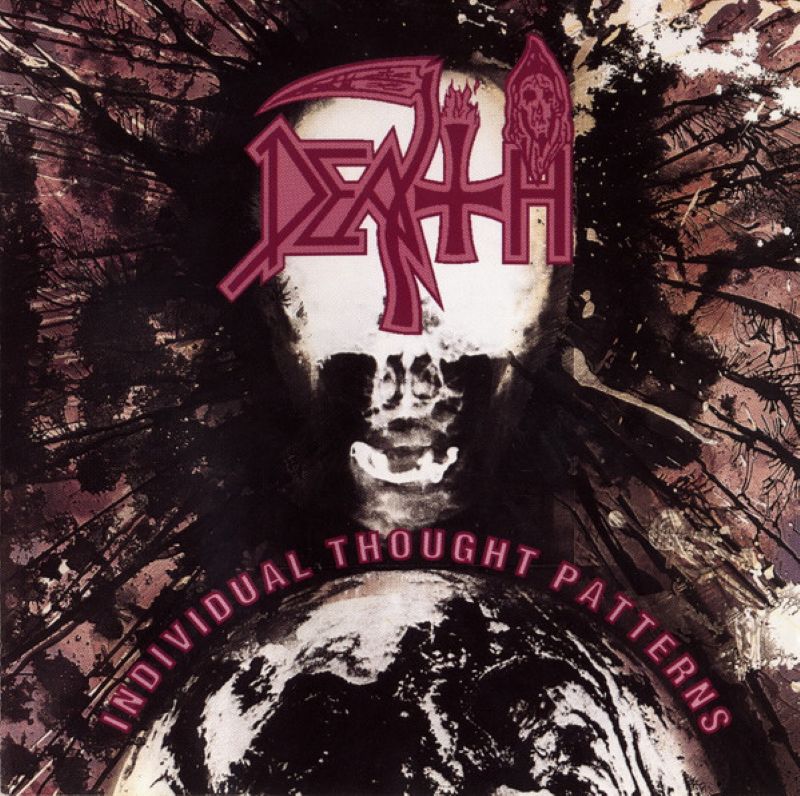
Like, I loved “Human”. “Human” is, to this day, my favorite Death album because of the songs, because of the performances of everybody involved, and just the aggression of it. It just sounded really mean, and it was well played. It sounded a lot meaner and much better played than the previous album, “Spiritual Healing”. It felt like Death had a breath of fresh air infused into it.
““Human” is, to this day, my favorite Death album”
So, with that in mind, when it came time for “Individual thought patterns” — writing and recording — the goal was to keep that spirit alive through the playing. But at first, when I was hearing these new songs, I remember thinking: “Wait a minute… these don’t hit me with the same level of aggression that Human did.” Chuck is taking this band in quite a direction. Am I on board? Am I not on board? Now, of course, I was on board, so I was like, well, how can I help Chuck reach his vision?
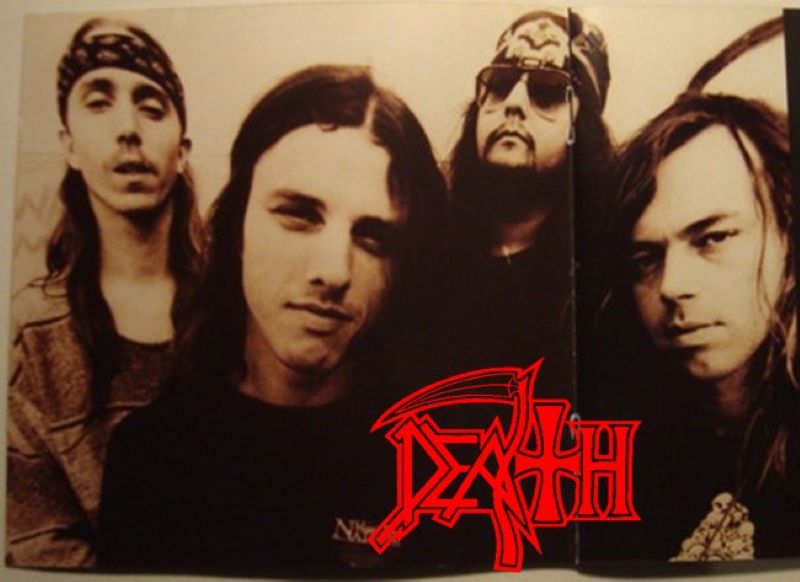
So, you know, that’s where I tried to create drum patterns that that really moved with the riffs, and I really utilized the riffs involved in in the in the in the songwriting form. So that’s where, you know, that album had its impact in terms of okay. There’s a new style of music coming. Death helped usher in another style with the previous album, technical death metal. You have your atheists and bands like that.
“So, Watchtower being, like, the grandfathers, the godfathers of technical metal.”
Prior to that, playing some technical music, we were all big Watchtower fans. So Watchtower being, like, the grandfathers, the godfathers of technical metal. They were the ground zero of technical metal, you know, fusing Metallica with King Crimson and Yes and Motorhead and all that kind of stuff, Rush. So keeping a lot of that spirit alive through the album “Individual thought patterns” and then to “Symbolic” album, you see how both are polar opposites in terms of approach.
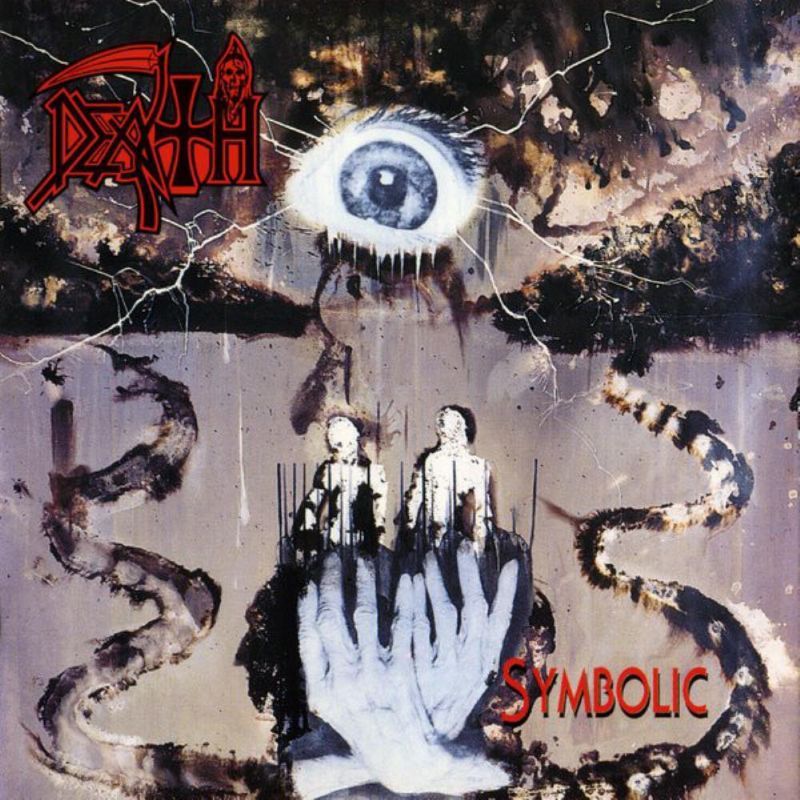
“Individual thought patterns” put together pretty quickly. You know, Chuck had a deadline he was working with. We put “Individual thought patterns” together in about three weeks, and then we were in the studio recording. With “Symbolic”, we had the chance to build things from the ground up in many ways — and you can hear that. That album has a different kind of feeling; it sits and settles in a more deliberate way.
“With “Symbolic”, we had the time to work things out, to try different ideas and experiment a bit.”
I’ve always described “Individual thought patterns” as a bull in the china shop of melody, musicality, and creativity. It just kind of felt… you know, a bit rushed and raw. With “Symbolic”, we had the time to work things out, to try different ideas and experiment a bit. With “Individual thought patterns”, it was more like: you’ve got an idea? Boom — there it is. Lock it in. Let’s go. But with “Symbolic”, we had the chance to move around a little more with the material, explore things, and really shape the songs.
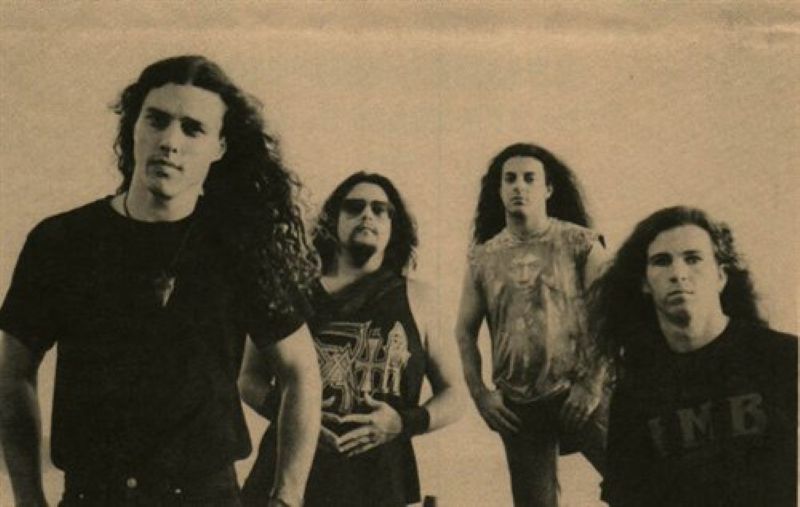
We had the time to really maneuver with the songs and let them settle into where they naturally needed to go. That was the main difference between those two albums. But I definitely think, and credit to Chuck for this, he wasn’t paying attention to what anyone else was doing. He had to follow his own heart, and that’s always been my number one rule: you’ve got to listen to yourself. You can’t have people in your ear saying, ‘You should sound like this’ or ‘You should sound like that.
“Just look at “Symbolic”. To a lot of people, that record is pretty much untouchable.”
Chuck only listened to Chuck — and to his credit, absolutely. Just look at “Symbolic”. To a lot of people, that record is pretty much untouchable. You just can’t fault that album. I feel pretty much the same way about “Individual thought patterns” and for me, “Human” as well. Still, you’ve got a very strong list of albums that have made Death one of those untouchable bands. There’s really not much you can fault Death for. So, kudos to Chuck.
A-B-S-O-L-U-T-E-L-Y! I totally agree with you! Chuck was an incredible musician who offered us “gems” of our favorite music. To me he was an artistic genius with an amazing understanding. The second part of my question was about the effect of the lyrics on the average metaller i.e. “Symbolic”
G: I understand that. Okay, I’m picking up what you’re laying down there. And I think that was just Chuck. Chuck himself said that part of what made him decide to only listen to himself was the realization that he wasn’t the same guy he was a decade earlier, writing “Scream bloody gore”, “Leprosy”, and all those albums. He wasn’t that same person anymore.
“He definitely had his own opinions about what was right and wrong, and that really started coming through lyrically on “Spiritual healing”“
You know, he was growing up a bit, starting to see what the world had to say about things. He definitely had his own opinions about what was right and wrong, and that really started coming through lyrically on “Spiritual healing”…Writing songs like “Altering the future”, “Living monstrosity”, “Genetic reconstruction”, and “Spiritual Healing” — where he’s observing and expressing strong feelings about real issues.
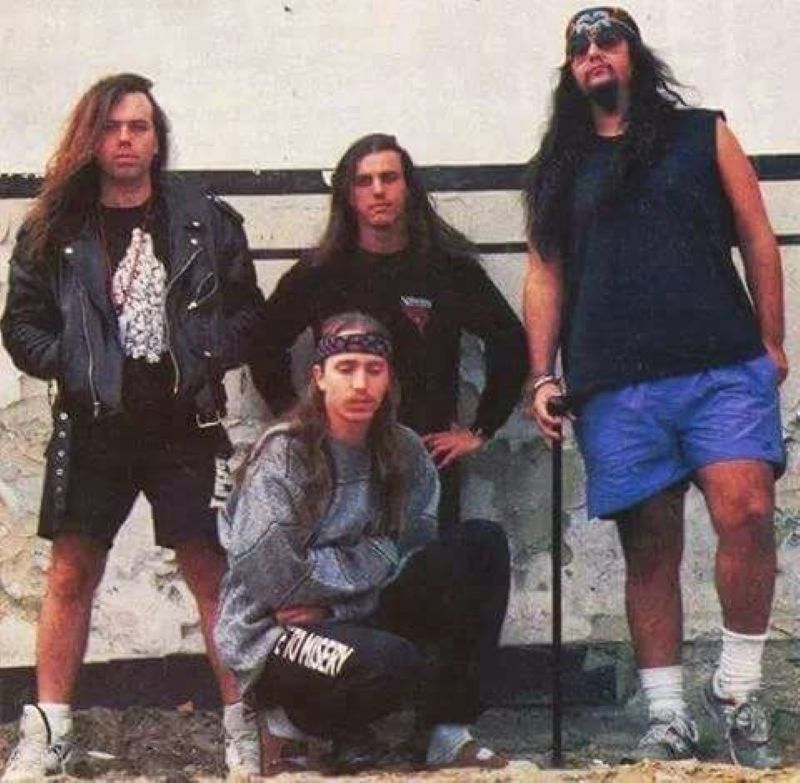
For Chuck, writing about real-life experiences started to matter more than just the usual ‘drink from the goblet of gore’ kind of themes. And that’s understandable — you know, you grow up a little. You start kind of seeing what’s going on in the world, and you want to write about that. I think when “Symbolic” came around, Chuck began writing more introspectively — really looking inward and reflecting on how he felt about things. It’s one thing to observe and say, “She’s a stupid bitch”, you know, that kind of thing.
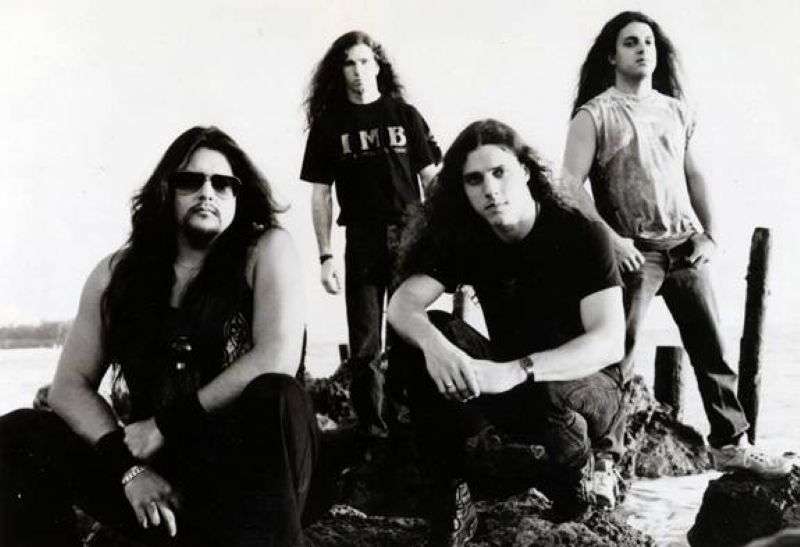
But when you start asking yourself some real-life questions — and that starts coming out through your art — that’s taking a huge leap forward. That’s putting yourself on the line, putting your soul — and yeah, your ass — out there. And I think it worked. For Chuck, it absolutely worked. It allowed people to see him in a much more human light — not just as the “godfather of death metal’ or the ‘godfather of gory lyrics.”
“That’s where it stands now: Chuck created himself, and he didn’t listen to anyone else. So yeah — good for you, Chuck.”
Those are shallow titles, honestly. Chuck wanted to be seen as Chuck Schuldiner — the artist. And I believe he took it upon himself to create that identity, on his own terms. That, to me, is where Chuck’s legacy truly lies. That’s where it stands now: Chuck created himself, and he didn’t listen to anyone else. So yeah — good for you, Chuck.
Absolutely! Next question, is it true that you were once a roadie in Slayer before you joined Dark Angel? If so, what was that time like in general and how did you join Dark Angel during the legendary “Darkness descends” era?
G: Well, it’s true — a lot of people are under the mistaken impression that I was Dave’s drum tech. People just kind of assume that. But no — I was actually their lighting guy. Not a lighting designer like they call it now — I just ran the lights for them. It wasn’t a big deal or anything, but I still remember how it all came about. I used to go see Slayer all the time when I was about 15 or 16. Back then, a lot of clubs in L.A. were all-ages, so they didn’t check IDs too strictly.
“I used to go see Slayer all the time when I was about 15 or 16.”
I’d just go and see Slayer whenever I could. At the time, they were a really small band in L.A. — and honestly, I think their music was just way too extreme and heavy for most people. In ’83 and ’84, everyone was into bands like Mötley Crüe, you know? The bandanas, the spandex — all that cock rock hair metal stuff, which to me was total horseshit.
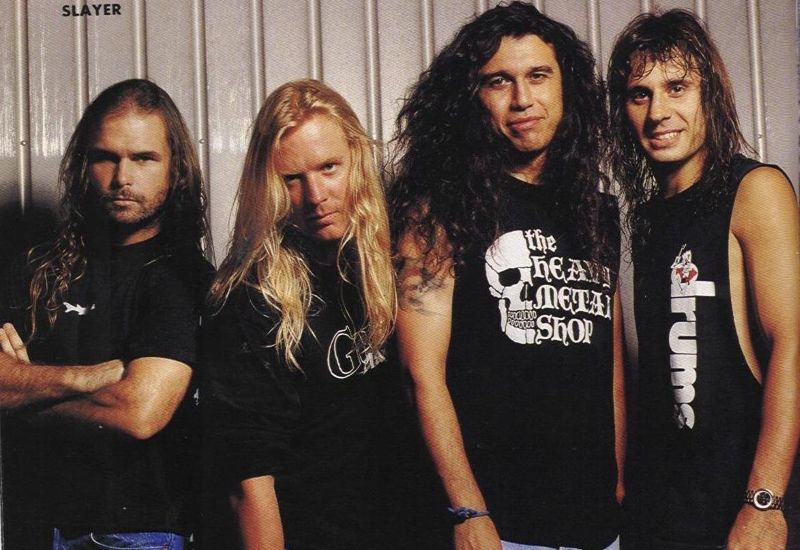
Slayer wasn’t part of that scene at all. They were doing tons of shows with Dark Angel and part of that underground metal movement. I mean, even Metallica started in L.A., but they bailed as soon as they got the chance — and I don’t blame them. So, how I ended up working for Slayer? We were all friends, and one night I showed up to a mid-week gig, and Tom goes, “Hey, our light guy’s not gonna make it. See that light board over there? You think you can figure it out?” I was like, ‘Sure.’ It had, like, eight buttons.
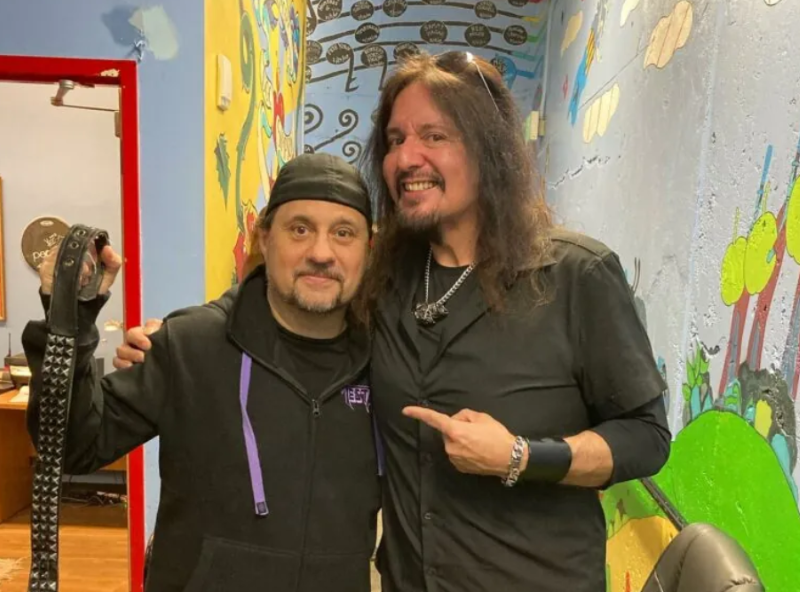
How hard could it be? The light board was about the size of an iPad — and I’m actually talking to you on an iPad right now. It was pretty tiny. So that night, I ran the lights, and it went great. The next week, same thing: another show, and the light guy couldn’t make it again. Tom asked me if I wanted to do it again, and I said, “Okay, sure.” After a while, it just became routine — I’d show up at the Slayer shows and head straight to the light board to run the lights.
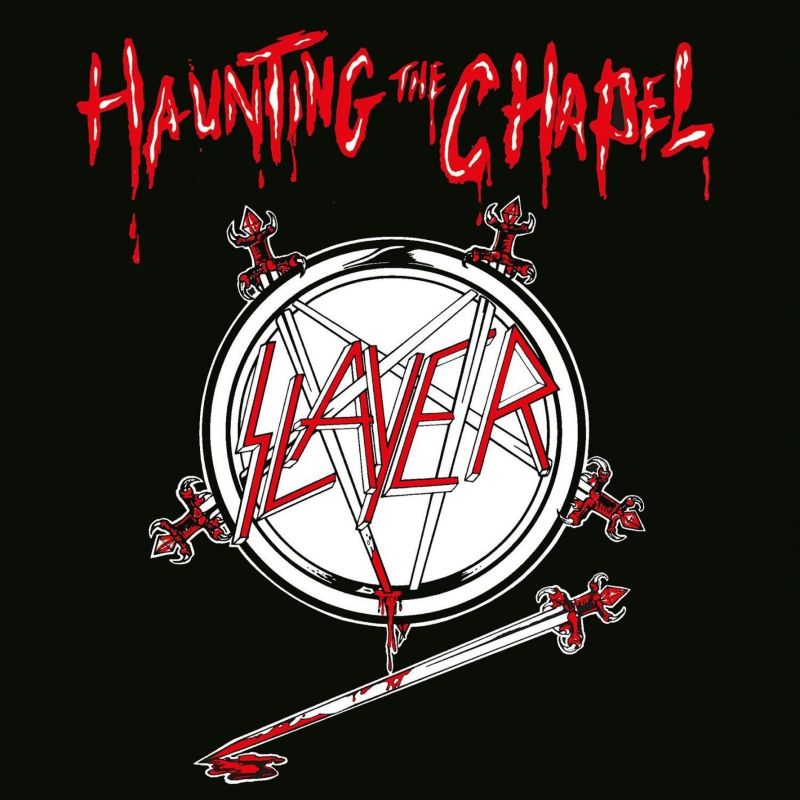
Then, when it was time for their very first tour — the “Haunting the West Coast” tour, a short run up and down the West Coast — Tom asked me if I wanted to come along. Later, Tom told me he had to ask my parents for permission to let me go on the road with them. I was like, “Wow That’s crazy.” He said, “Well, you were a minor, so I had to, you know, become your legal guardian for that tour.”
“Later, Tom told me he had to ask my parents for permission to let me go on the road with them.”
So on that run, I often did Dave’s sound checks — I’d go play his drums while the band jammed, just so Dave could hear what the band sounded like from the front of house. Guitarists and vocalists can easily walk out front with wireless setups to hear how the band sounds, but drummers rarely get that chance unless someone else plays the material for them. That someone was me. So yeah, that’s how it worked. It was pretty fun.
Also is it true that you once got a ship’s propeller and used it in your then drum kit?
G: Yes, it is. You can see that propeller — I got it at the end of Dark Angel’s first run in the music scene, and then I used it on the “Individual Thought Patterns” album. Anytime you hear that little ding, kind of like hitting a ride bell, especially in the chorus of “Overactive Imagination”, that’s the propeller. It’s all over that record. I used it instead of a splash cymbal or something similar.
So yeah, it’s definitely featured there. You can even see it in the “Philosopher” video on YouTube — if you watch it, you’ll see me playing drums with a big boat propeller right in front of me. It was just something fun to play with. I’ve always been pretty adventurous when it comes to drumming — I like introducing odd, weird sounds and things. So yeah, that’s the story.
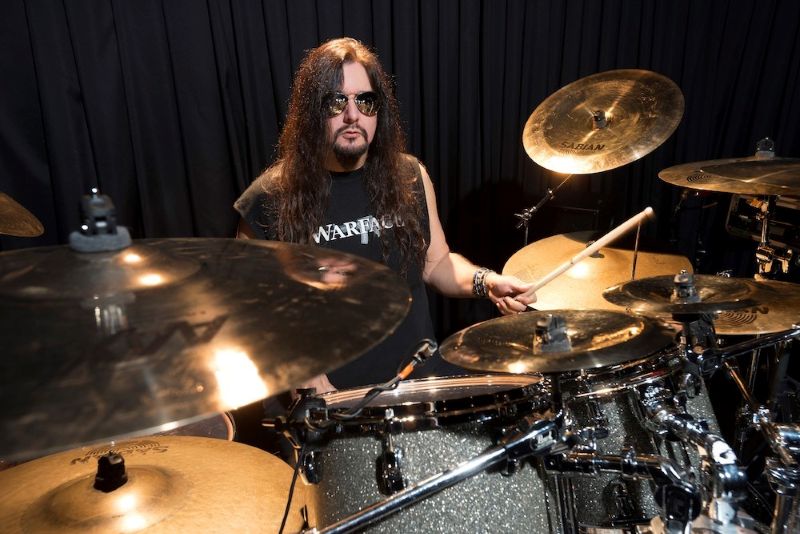
You will perform in Athens and at Gagarin 205 on August 1st. What can people expect from Dark Angel in this show?
G: What you can absolutely expect — 100% — is a night of intense, relentless, brutal metal, just straight in your face, man. That’s what Dark Angel is known for: intense live shows. The last time we played in Greece, the crowd was absolutely nuts.